


Types of Scaffolding Used in Indian Construction Sites
The Indian construction industry is growing rapidly — from residential apartments to high-rise commercial buildings, metro projects, bridges, and industrial plants. One of the most critical components ensuring safety and efficiency on-site is scaffolding.
Scaffolding provides temporary support and access for workers at height. Choosing the right type of scaffolding improves productivity, ensures safety, and reduces project delays.
In this blog, we will explore the major types of scaffolding commonly used across Indian construction sites.
1. M.S. (Steel) Scaffolding
Mild Steel (M.S.) Scaffolding is one of the most widely used systems in India due to its strength and durability.
Key Features:
- High load-bearing capacity
- Strong and durable
- Suitable for heavy construction work
- Reusable for multiple projects
Best Used For:
- High-rise buildings
- Industrial construction
- Bridges & infrastructure projects
Steel scaffolding is ideal for contractors handling heavy-duty construction where strength and stability are critical
2. Aluminium Scaffolding
Aluminium scaffolding is lightweight and easy to move, making it perfect for interior and maintenance work.
Key Features:
- Lightweight and portable
- Rust-resistant
- Easy assembly and dismantling
- Suitable for quick shifting
Best Used For:
- Interior finishing work
- Painting & electrical work
- Maintenance projects
- Mall & airport projects
Due to its portability, aluminium scaffolding is preferred where mobility and speed are important.
3. Cuplock Scaffolding System
The Cuplock Scaffolding System is a modular scaffolding system widely used in India.
Key Features:
- Quick locking mechanism (cup & blade system)
- Faster erection and dismantling
- High load capacity
- Suitable for complex structures
Best Used For:
- Large commercial projects
- Flyovers & bridges
- Industrial plants
- Metro rail projects
Cuplock systems are known for saving time and labor costs on large-scale sites.
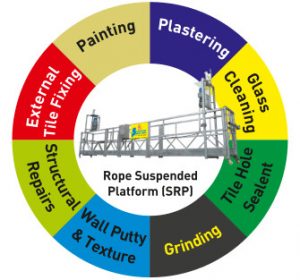
4. Suspended Scaffolding
Suspended scaffolding hangs from the top of a building using ropes or chains.
Key Features:
- Adjustable height
- Ideal for tall buildings
- Used for exterior finishing
Best Used For:
- High-rise glass cleaning
- Exterior painting
- Façade maintenance
This type is often used in metro cities for skyscraper maintenance.
5. Mobile Scaffolding
Mobile scaffolding comes with wheels (casters) that allow easy movement.
Key Features:
- Easy to move
- Time-saving
- Suitable for indoor projects
Best Used For:
- Warehouse work
- Electrical & ducting installation
- Factory maintenance
It reduces the need for repeated dismantling and reassembly.
Which Scaffolding Is Best for Indian Construction?
The best scaffolding type depends on:
- Project height
- Load requirements
- Site conditions
- Budget
- Time constraints
For heavy infrastructure, cuplock systems are ideal.
For interior or short-term projects, aluminium or mobile scaffolding works best.
Conclusion
Scaffolding plays a vital role in ensuring worker safety, construction efficiency, and project speed. With India’s growing infrastructure sector, selecting the right scaffolding system is more important than ever.
Whether it’s M.S. scaffolding for strength or aluminium scaffolding for flexibility, each type serves a specific purpose on Indian construction sites.
📞 Get Reliable Scaffolding Solutions for Your Next Project
Choosing the right scaffolding system is critical for safety, speed, and structural efficiency. Whether you need M.S. Scaffolding, Aluminium Scaffolding, Cuplock systems solutions, selecting a trusted supplier makes all the difference.
At AACE MEGAINFRA PVT. LTD., we specialize in high-quality M.S. & Aluminium Scaffolding systems designed to meet the demands of modern Indian construction sites. Our products are durable, safe, and suitable for residential, commercial, and industrial projects.


Post a comment